
GAME DETAIL
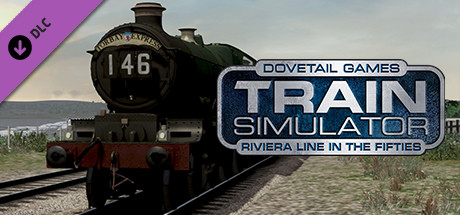
Train Simulator: Riviera Line in the Fifties: Exeter - Kingswear Route Add-On
種別:DLC
発売日:2015年9月17日
日本語対応未確認
1,980円
Steamレビュー
レビュー不足または未評価
100.0%
1件
Incorporated by an Act of Parliament in 1835, the origins of the Great Western Railway lay with merchants from Bristol who felt threatened by the growing strength of Liverpool as a major trading port through its development of a railway connection to London.
このゲームについて
Steamの詳しい説明を読む
Incorporated by an Act of Parliament in 1835, the origins of the Great Western Railway lay with merchants from Bristol who felt threatened by the growing strength of Liverpool as a major trading port through its development of a railway connection to London. In order to maintain the importance of their own port, a railway to the west was most definitely needed!
Infamous for its use of the alternative ‘Broad Gauge’ 7ft infrastructure, the GWR was happy to wage war with other developing railway companies throughout the remainder of the 1900s, as lines extended across much of the country using mostly ‘Standard Gauge’ 4ft 8½in. Slowly though ‘Mixed Gauge’ began to eat its way south into GWR territory as the arrangements for transhipment from one mode to the other for onward travel became a major bugbear. Following further action from Parliament, the continuation of Broad Gauge was a lost cause. However, the required space for operating a Broad Gauge railway meant that on conversion to Standard Gauge, available land was extremely generous. Something which the GWR would not always learn to take advantage of as we shall see from one particular line on the south coast.
Construction of the line from Newton Abbot to Kingswear occurred in stages between 1852 and 1864 and, unlike other branch line additions, this one attracted higher than expected patronage from the very beginning. No later than the 1890s, the railway was the sole factor in establishing Torbay as one of the top holiday destinations of the era. By 1905 the line was doubled, although curiously only as far as Paignton, leaving the final six miles to Kingswear as single track. Given continued exceptional growth in traffic through to the 1930s, the GWR was forced to begin works to enlarge Paignton, though sadly this was interrupted by the onset of war, and ultimately the plans never became reality. Had any of the other ‘Big Four’ operated the route, no doubt Paignton would have developed into a major terminus, but continuing under the GWR the endless line of holiday trains had to be processed by a facility with no more than one platform for each direction. To suggest this was still just a ‘branch line’ was an understatement as it was not uncommon even on weekdays that more trains were bound for Torbay, than those to Plymouth or Penzance.
The line down from Exeter St David’s to Kingswear is defined by two constituent parts – the high speed coastal run, skirting the beaches and bays along the Dawlish Sea Wall; and the mountainous curvaceous crawl down to the seaside resorts. Operating the required trains and timetables therefore required crews of very broad experience and skills, especially given that to keep everything moving services frequently operated very early in the morning and usually late into the night. Add in the occasional channel storm and you have ingredients for some very weathered men and machines.
Both Exeter and Newton Abbot were well established locomotive depots by the peak of steam operation of the route in the 1950s, with full compliments of water, coal, turntables and extensive maintenance facilities, let alone vast stabling sidings for stock to cater for any and all requirements. Most engines would visit one of these locations during their time in the area, aside from those allocated to the depots permanently.
Paignton and Kingswear equally featured facilities to establish themselves, with the latter complimented by its own turntable, even if it was somewhat squeezed into the limited available space. To relieve Paignton of some of the stresses, nearby Goodrington Sands Halt was extensively expanded to provide lengthy carriage sidings. Efforts went even further by starting some services at the Halt, and while this only consisted of four northbound trains a day, between them some 36 coaches and over two thousand passengers would be catered for in just a few hours!
To facilitate all this traffic, what about looking at the prestigious motive power developed and assigned to the significant task of keeping the south coast moving, and the GWR is certainly famous for its contributions to the history of steam traction.
Eighth in line as Locomotive Superintendent at the GWR, Charles Collett was following in the footsteps of some very big names for engine design. Isambard Kingdom Brunel himself, William Dean and George Jackson Churchward to name but a few to have gone before and left their mark on the rails to the west.
Taking up the post in 1922, Collett was first presented with the myriad of locomotive types absorbed from company mergers that in several cases would continue to occur for years to come. Collett was quick to establish a means of standardisation by rebuilding many locomotives using common GWR manufactured parts from Swindon works. Though this was not his desired focus.
Charles Collett wanted to design modern new locomotives, and it was in this field where he was able to leave one of the most significant marks in the GWR history. Wishing to replace many older types with bigger and better performing machines, Collett would apply his attention to both tank and tender types, producing no less than 25 different designs that would see full production during his occupancy.
Amongst those productions would come some of the most iconic locomotives of the day. The GWR being what it was, which some would claim as the birth of modern marketing techniques, Collett was responsible for the powerfully named Castle, Hall, Pannier, Grange and ultimate of them all, King classes. All being of the 4-6-0 type with the exception of the Pannier, the locomotives would all be ideal express operators for the GWR. Each one of these designs carrying appropriate names both for themselves and the services they hauled.
This was indeed the pinnacle of steam locomotive development at the GWR. For it was also under the reign of Charles Collett that diesel power would first appear, and hence forth the landscape of railway traction would change forever.
Transfer this world to the realms of Train Simulator and you can see we have the setting for a most amazing experience with the pressures of squeezing mainline traffic onto branch line facilities; from shunting coaching stock, to hauling holiday expresses and from managing locomotives to maintaining the timetable.
Driver Assist
Have you ever wanted to drive a steam engine in Train Simulator but thought they were too complicated, difficult to understand or just too hard to control? Now you can with our new Driver Assist!
The all new Driver Assist feature provides you with real-time feedback on the handling of the locomotive, to teach you how to provide optimum control input in order to keep the engine at peak operating condition. Initially we’re including this just for the steam engines in TS2016 but will be listening to your feedback and look at implementing it to other types of locomotive.
Driver Assist works by highlighting the control required to be adjusted and provides you with detailed instructions and real-time feedback as to how far you need to move the control and what effect it has on the locomotive. Once you’ve got the hang of it, the system is designed so you can turn it off and go it alone. If you get stuck and feel you need the help again, you can turn it back on.Included Locomotives & Rolling Stock
GWR 4073 Class (Castle Class) in Brunswick Green, Wartime and Weathered Liveries
GWR 4073 Class (Castle Class) Double Chimney Variant in Brunswick Green Livery
GWR 5700 Class (Pannier Tank) in Brunswick Green, Clean and Weathered Liveries
GWR 6000 Class (King Class) in Express Blue and Brunswick Green Livery
GWR 6800 Class (Grange Class) in Brunswick Green, Clean and Weathered Liveries
GWR 6959 Class (Modified Hall Class) in Brunswick Green, Clean and Weathered Liveries
Hawksworth Centenary Coaches in Blood & Custard Livery
GWR Collett Excursion Coaches in Blood & Custard and Maroon Liveries
BR Mk1 Coaches in Chocolate & Cream Livery
GWR 3, 5 and 7 Plank Wagons, Standard Vans, Fish Vans, Milk Tanks, Siphon G Wagons and 20T GWR TOAD Brake Van
Included Scenarios
The Riviera Line in the Fifties Route Add-on includes fifteen career scenarios:
01. [Castle] Introduction to the Castle
02. [Pannier] Good run to Goodrington
03. [Pannier] Climbing out of Kingswear
04. [Pannier] Saturday Shuffle
05. [Pannier] Saturday Puzzle
06. [Castle] Goodrington Gamble
07. [Castle] Exeter Endurance
08. [Castle] Running Half Full
09. [Castle] Running Half Empty
10. [Grange] Express Freight
11. [Grange] Extreme Freight
12. [Grange] Dawlish Sunrise
13. [Grange] Dawlish Storm
14. [Castle] Operation Torbay
15. [Castle] Torbay Troubles
The Riviera Line in the Fifties Route Add-On also includes three Railfan Mode scenarios and two Quick Drive Scenarios:
[RailfanMode] Churston
[RailfanMode] Newton Abbot
[RailfanMode] Dawlish
EK QD Northbound
EK QD Southbound
More scenarios are available on Steam Workshop online and in-game. Train Simulator’s Steam Workshop scenarios are free and easy to download, adding many more hours of gameplay. With scenarios being added daily, why don’t you check it out now!Common Key Features
Advanced steam engine simulation for all included locomotives
Steam Chest & Steam Heat Simulation
Larger Hawksworth Four-Row Superheater Simulation (Castle Class)
Live & Exhaust Water Injector Function
Advanced Particle Emitter Function
Fire Pulsing & Visible Fire Level
Realistic Wheelslip/Sanding Function
Realistic Cylinder Cock Control + Damage Simulation
Realistic Boiler Priming Simulation
Shifting Water Acceleration/Braking Simulation
Water Sight Glass + Regulator Lubrication
Water Trough Tender Refilling Function
Small & Large Ejector Function
Headcode & Headboard Function
Cab & Instrument Lighting (Where Appropriate)
Quilling Whistle
Smokebox Door, Blowdown & Ashpan Simulation
Driver Assist Functionality
Accurate sounds provided by Steam Sounds Supreme
Fifteen challenging career and three Railfan Mode scenarios
Quick Drive compatible
スクリーンショット

評価・レビュー
全体レビュー レビュー不足または未評価 好評率 100.00% / 1件 取得:2026年8月28日 20:49
ATTENTION
注目度メトリクス
プレイヤー推移
データ蓄積中 24時間平均選択した期間に観測データはありません。
Steamフォロワー推移
2件以上で集計 直近7日選択した期間に観測データはありません。
プレイヤー数とフォロワー数は意味と単位が異なるため、 別々の時系列として表示しています。補間した値は使用していません。
発売後注目度の基礎指標 発売済みタイトルのため、現在プレイヤー数・ピーク値・Steamフォロワー数を組み合わせて勢いを観測します。
| 指標 | 現在値 | 観測状況 |
|---|---|---|
| 現在プレイヤー数 | 未集計 | 最終観測:未集計 |
| 24時間ピーク | データ蓄積中 | 未集計・直近7日 0件 |
| Steamフォロワー数 | 未集計 | 最終観測:未集計 |
| 7日フォロワー増加 | 2件以上で集計 | 未集計・直近7日 0件 |
PlayMEXが保存した観測値です。取得時刻と観測数を あわせて確認できます。
ジャンル・機能
機能カテゴリ
SteamクラウドSteamトレーディングカードSteamランキングSteamワークショップSteam実績シングルプレイヤーダウンロードコンテンツファミリーシェアリングフルコントローラサポート
注目ポイント
更新あり 直近14日以内にSteamストア更新
価格変更 直近14日以内にSteam価格情報の変更
ゲームライフログ
所有ゲームとして同期されると、 このゲームの記録を残せます。