
GAME DETAIL
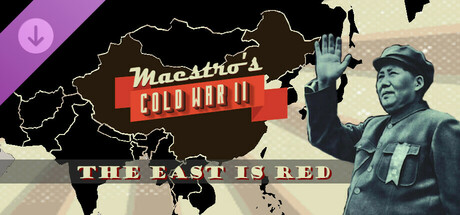
Maestro's Cold War 2 - The East is Red
種別:DLC
発売日:2025年4月3日
日本語対応未確認
580円
Steamレビュー
レビュー不足または未評価
71.4%
7件
Play as China from 1949 to 1976 in this extention for Maestro's Cold War 2.
このゲームについて
Steamの詳しい説明を読む
Lead China from 1949 to 1976 in this extention for Maestro's Cold War 2.
Turn China into a superpower, and challenge the Imperialists in Asia, and then in the whole world.
This extention proposes game mechanisms and actions proper to China.
Here are the key events and challenges one might expect during this timeline:
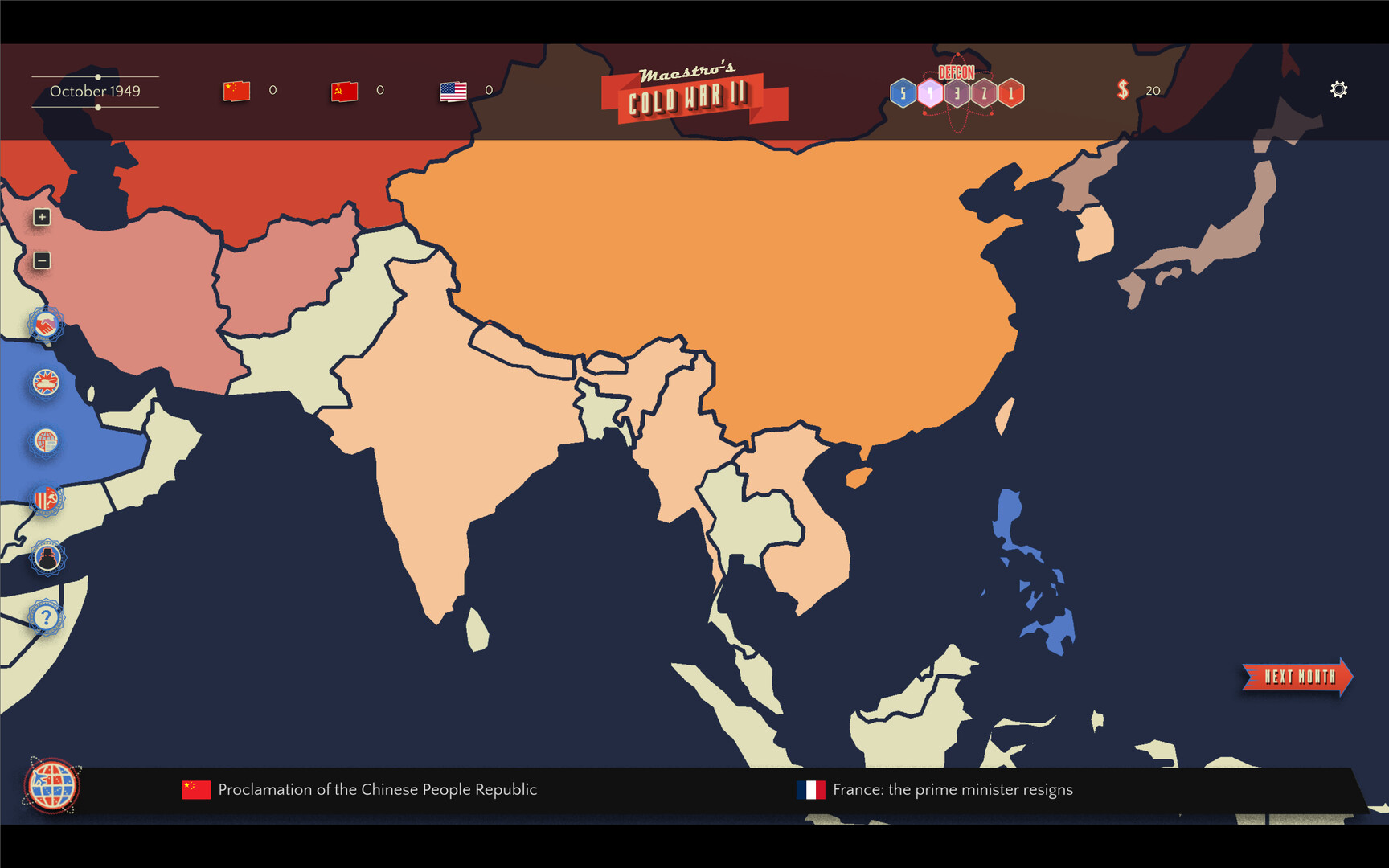
Establishment of the People's Republic of China (1949): On October 1, 1949, Mao Zedong declared the founding of the People's Republic of China (PRC) after the Chinese Civil War ended with a victory for the Communist Party over the Nationalist forces.
Land Reform and the Korean War (1950-1953): After the PRC's formation, land reforms redistributed land from landlords to peasants. At the same time, China became involved in the Korean War, supporting North Korea against UN forces led by the United States.
First Five-Year Plan (1953-1957): The Communist government implemented its First Five-Year Plan to industrialize China and modernize its economy, largely focusing on heavy industry and agriculture.
The Great Leap Forward (1958-1962): Mao initiated this ambitious program to rapidly industrialize and collectivize agriculture. However, it led to widespread famine, economic hardship, and millions of deaths, ultimately marking a significant failure.
The Cultural Revolution (1966-1976): Mao launched the Cultural Revolution to reassert his authority and preserve Communist ideology by removing capitalist, traditional, and cultural elements from Chinese society.
Sino-Soviet Split (1960s-1970s): A growing ideological and political rift between China and the Soviet Union, partly over differences in Communist doctrine, led to a break in relations between the two countries, which affected global Cold War dynamics.
Mao's Return to Power (1969-1976): In the late 1960s, Mao increasingly regained control over the Communist Party, sidelining rivals. His efforts to maintain revolutionary fervor led to the intensification of the Cultural Revolution.
Normalization of US-China Relations (1972): President Richard Nixon's visit to China in 1972 marked a significant thaw in Sino-American relations, which had been frozen since the Chinese Revolution. This paved the way for the eventual establishment of diplomatic relations between the US and the PRC.
スクリーンショット
評価・レビュー
全体レビュー レビュー不足または未評価 好評率 71.43% / 7件 取得:2026年9月20日 18:42
ATTENTION
注目度メトリクス
プレイヤー推移
データ蓄積中 24時間平均選択した期間に観測データはありません。
Steamフォロワー推移
2件以上で集計 直近7日選択した期間に観測データはありません。
プレイヤー数とフォロワー数は意味と単位が異なるため、 別々の時系列として表示しています。補間した値は使用していません。
発売後注目度の基礎指標 発売済みタイトルのため、現在プレイヤー数・ピーク値・Steamフォロワー数を組み合わせて勢いを観測します。
| 指標 | 現在値 | 観測状況 |
|---|---|---|
| 現在プレイヤー数 | 未集計 | 最終観測:未集計 |
| 24時間ピーク | データ蓄積中 | 未集計・直近7日 0件 |
| Steamフォロワー数 | 未集計 | 最終観測:未集計 |
| 7日フォロワー増加 | 2件以上で集計 | 未集計・直近7日 0件 |
PlayMEXが保存した観測値です。取得時刻と観測数を あわせて確認できます。
ジャンル・機能
機能カテゴリ
Steam実績ダウンロードコンテンツファミリーシェアリングフルコントローラサポート
ゲームライフログ
所有ゲームとして同期されると、 このゲームの記録を残せます。