
GAME DETAIL
The Gaffer
種別:ゲーム
発売日:2026年10月
日本語対応未確認
価格未定
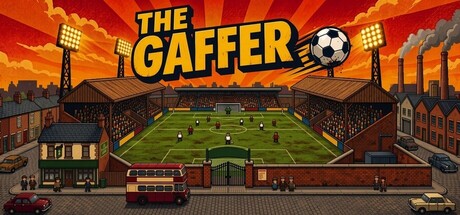
A retro football management sim. Start in the Fourth Division in 1959 and manage thirty seasons of English football, at one club or several, by the real rules of each season. Sign, sell, drill and talk your way up, while your board, your pub and your town remember every result and every excuse.
このゲームについて
Steamの詳しい説明を読む
THE GAFFER starts you at the gates in August 1959, in Division Four, with a chairman willing to take a chance on you and a town that hasn't decided yet if you're any good. From there it's yours: up to thirty years in the dugout, one manager, one long career at one club or several, told as it happens rather than looped forever.
All 92 Football League clubs are placed in real English and Welsh towns rather than placeholders, each with its own researched local history, and the real national headlines of the day run alongside your career as it unfolds. Below them wait twelve non-League clubs, playing a season of their own every year and hoping for a place in the League. Every club has its own squad, its own books and a manager with a career of his own, hired, sacked and poached away as results go. You can look any of them up, and you will feel the weight of all of them. At season's end the Gazette names its best player, goalkeeper and manager across the League, delivered as gossip and headlines rather than a spreadsheet.
The whole League moves by the real rules of its day. Two up and two down at the top until 1973, three after. Until 1986 the bottom four of the Fourth Division have to ask the League's annual meeting to re-elect them, and a club that asks once too often can be voted out, yours included. From 1987 the bottom club drops to the Conference. The play-offs arrive in 1986-87, and if you finish in them you play the ties yourself: two legs, extra time, penalties, and in 1987 a replay. Thirty seasons on, the First Division you look up at is not the one you started under.
The rules of the day are the rules of the game. No substitutes until 1965, and then only for an injury. Goal average until 1976. Two points for a win until 1981. No sponsor's name on a shirt until 1979. No red card between 1981 and 1987. Nobody in the game, not the press, not the pub, not the board, talks about something that hasn't happened yet.
Your club has a life outside the ninety minutes. Down at the pub, a regular cast of locals, the landlord and the old boys who never miss a home game, talk about your results and your record, and they remember what you've actually done, not just this week's scoreline. In the back room, the Snug, six named figures wait: the vice-chairman, the sponsor, a local businessman, the town councillor, the mayor and the supporters' rep, each tracking their own trust and opinion of you. Those memories fade the way real ones do. A big win stays sharp for a while before settling into the background, so what people say about you reflects not just what happened, but how recently.
The board runs on more than league position. Confidence, patience and finances move independently, and a bad-luck run reads differently to the board than a run of bad football. If they do show you the door, the story doesn't end there: you find another club and the career carries on to 1989. The economics follow the era: wages, gate money, ticket prices and sponsorship all rise on a genuine thirty-year inflation curve, not a modern number in a flat cap.
Build a squad the honest way. Sign, sell and negotiate against 91 other League clubs after the same talent, or grow your own through a working Academy where prospects develop, break through or wash out. Players age, decline and retire, the same as their manager eventually will. Injuries have to be managed, not shrugged off. Team talks, live match commentary and a post-match replay put you inside the ninety minutes. Win a trophy, a cup, promotion or the title, and it's real: the actual starting XI on the pitch, the captain lifting it, a pitch invasion for the big ones. Ordinary match wins don't get that. It's earned, not automatic.
Four divisions, two cups, promotion, relegation, re-election and the play-offs, and a season running August to May.
Every word the club speaks comes from the game's own Internal Intelligence system. The pub's talk, the boardroom's verdict and the morning's headline are all worked out from what has actually happened in your save and how each person feels about you, with enough chance running through it that no two careers sound quite the same. It all runs on your own machine: nothing is sent anywhere, no internet connection is needed to play, and it asks for no more than a dual-core processor and 8 GB of RAM.
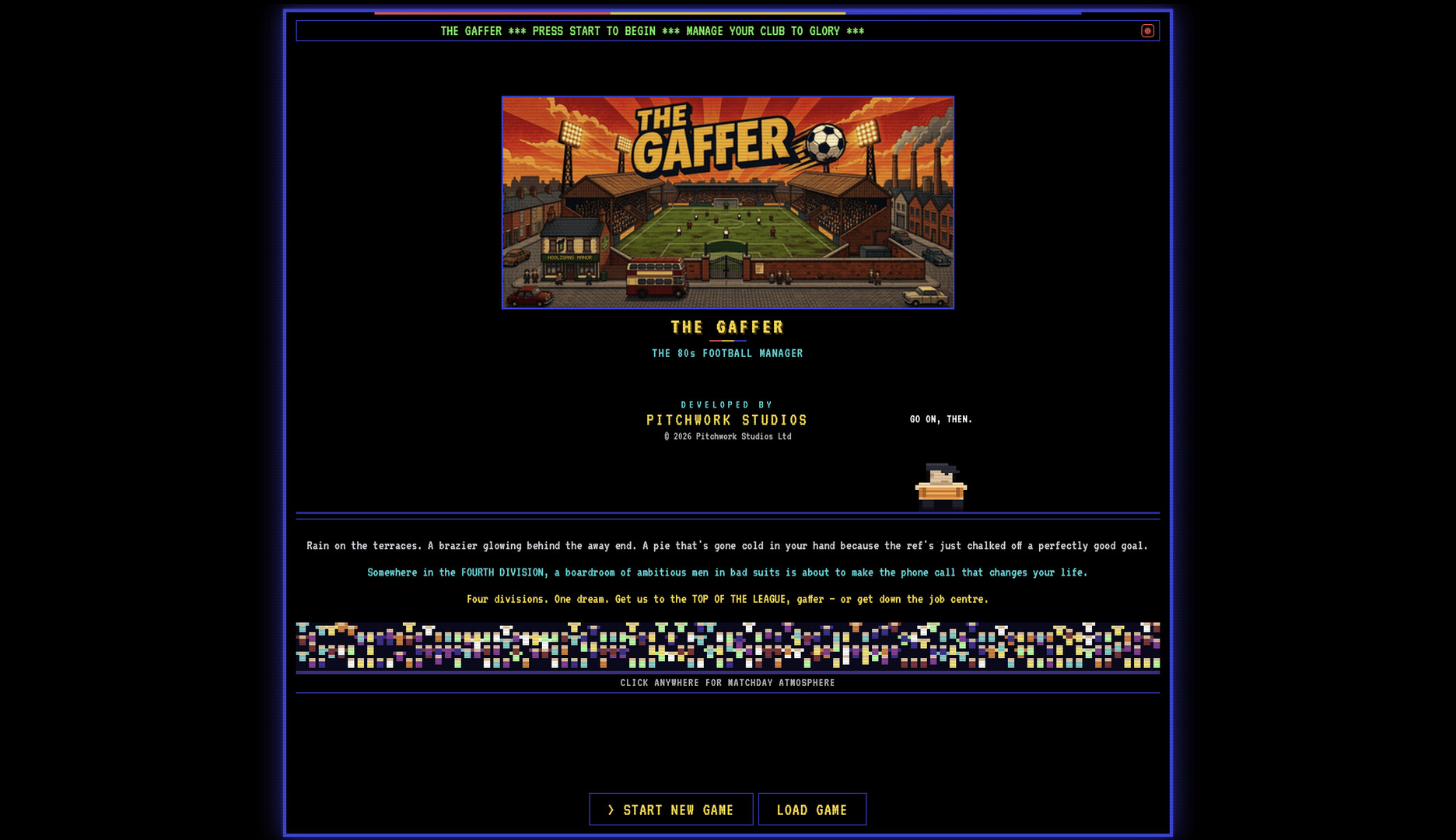
Built entirely around an authentic eight-bit visual style. A manager's career starting in 1959 deserves a screen that belongs to its era, not a modern broadcast graphic with a retro filter.
* A real starting point in English football history: August 1959, built from real national and local events across a genuine thirty-year span.
* A living, thirty-year career: one manager, one story, with real ageing and a genuine end, not an endless loop. Get the sack and you find another club; the career carries on.
* A League that moves by the real rules: 92 clubs going up and down by each season's rules, re-election until 1986, the Conference from 1987, and play-offs you play yourself.
* The rules of the day: no substitutes until 1965, goal average until 1976, two points for a win until 1981, no shirt sponsors until 1979.
* A world that remembers, and forgets: the pub regulars and the six named Snug figures track trust individually, and those memories fade with time.
* A world that's alive beyond your club: every club with its own squad, books and manager, hirings, sackings and poachings, and a season's-end best-manager award across the League.
* An economy of its own era: wages, sponsorship and ticket prices on real thirty-year inflation data.
* A full football life: transfers, a working Academy, ageing squads, injuries, half-time talks, match replays, and a real on-pitch celebration when you actually win a trophy.
* Its own Internal Intelligence: the pub, the board and the Snug answer from what your save remembers, so no two careers sound alike. Fully offline, nothing leaves your device.
* Runs on modest hardware: a dual-core processor and 8 GB of RAM, kind to Steam Deck battery life.
* A distinctive period look, built entirely around an authentic eight-bit style, inside and out.
* Four divisions, two cups, promotion, relegation, re-election and the play-offs, and a season running August to May.
Coming to Windows, Mac, Linux and Steam Deck.
スクリーンショット
ATTENTION
注目度メトリクス
プレイヤー推移
データ蓄積中 24時間平均選択した期間に観測データはありません。
Steamフォロワー推移
2件以上で集計 直近7日選択した期間に観測データはありません。
プレイヤー数とフォロワー数は意味と単位が異なるため、 別々の時系列として表示しています。補間した値は使用していません。
発売前注目度の基礎指標 発売前タイトルのため、Steamフォロワー数と7日増加を中心に注目度を観測します。
| 指標 | 現在値 | 観測状況 |
|---|---|---|
| 現在プレイヤー数 | 未集計 | 最終観測:未集計 |
| 24時間ピーク | データ蓄積中 | 未集計・直近7日 0件 |
| Steamフォロワー数 | 1人 | 最終観測:2026年9月8日 11:10(24日経過) |
| 7日フォロワー増加 | 2件以上で集計 | 履歴あり・更新待ち・直近7日 0件 |
PlayMEXが保存した観測値です。取得時刻と観測数を あわせて確認できます。
ジャンル・機能
機能カテゴリ
シングルプレイヤーファミリーシェアリング
注目ポイント
更新あり 直近14日以内にSteamストア更新
ゲームライフログ
所有ゲームとして同期されると、 このゲームの記録を残せます。